IDENTITY / TRUSTIntent begins with people and protocols.
Okta, SAML, OIDC, SCIM, password convergence, role decisions, and session ownership establish who is asking for what.
Authority, protocol, physical placement, relays, health, console readiness, and evidence appear together without pretending configured relationships are live traffic.
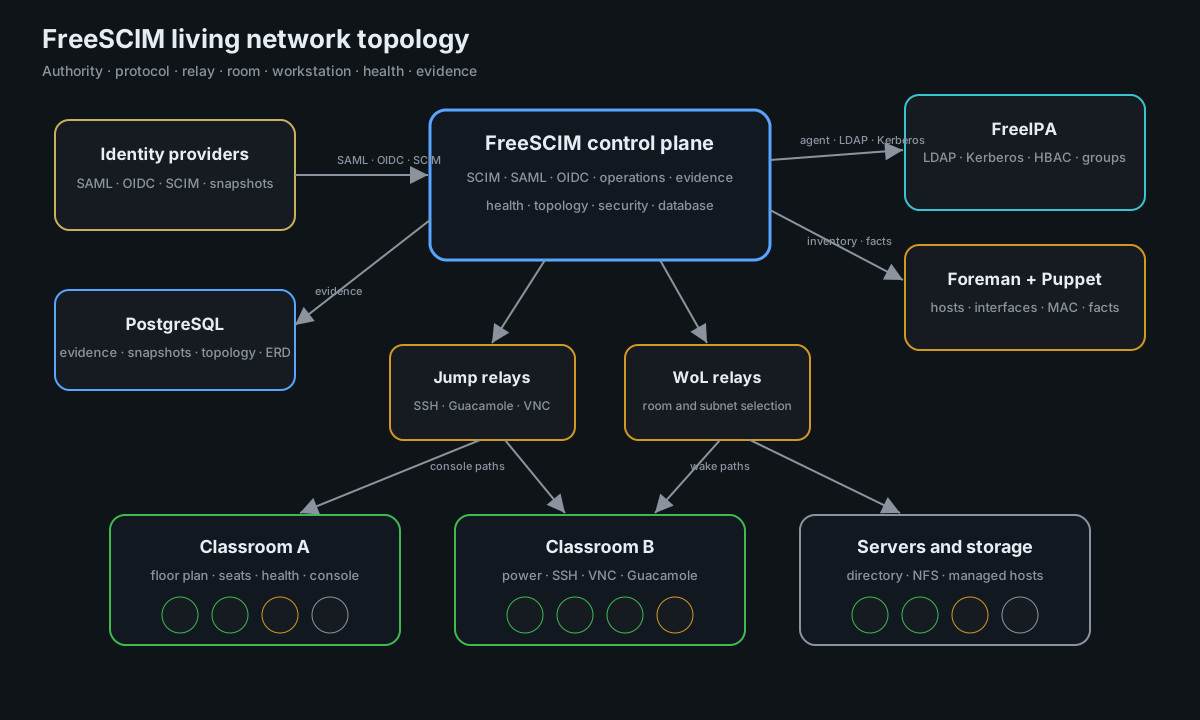
The graph is useful because it shortens diagnosis: it shows which layer owns the next decision and which boundary should be inspected.
IDENTITY / TRUSTOkta, SAML, OIDC, SCIM, password convergence, role decisions, and session ownership establish who is asking for what.
INFRASTRUCTURE / AUTHORITYFreeIPA, DNS, Kerberos, Foreman, Puppet, storage, host identity, and relay relationships define the operational substrate.
EDGE / ACTIONRooms, seats, WoL, SSH, VNC, Guacamole, power state, and endpoint evidence prove whether the requested outcome reached reality.
Configured relationships, inferred expectations, current observations, and evidence-backed state are different things. FreeSCIM preserves that distinction.
Declared services, protocols, rooms, relays, and ports.
Expected directory, Kerberos, DNS, Puppet, storage, and estate relationships.
Current probes, console readiness, blockers, health, and runtime state.
Rooms, workstation actions, logs, sessions, and remediation context.
Choose a system, relay, room, workstation, or protocol edge; inspect the linked evidence; identify the real boundary; then move into the correct control surface.